

I Couldn't Find a Seat at the Table, So I Built My Own
Why the future of leadership belongs to those willing to create institutions, not climb them
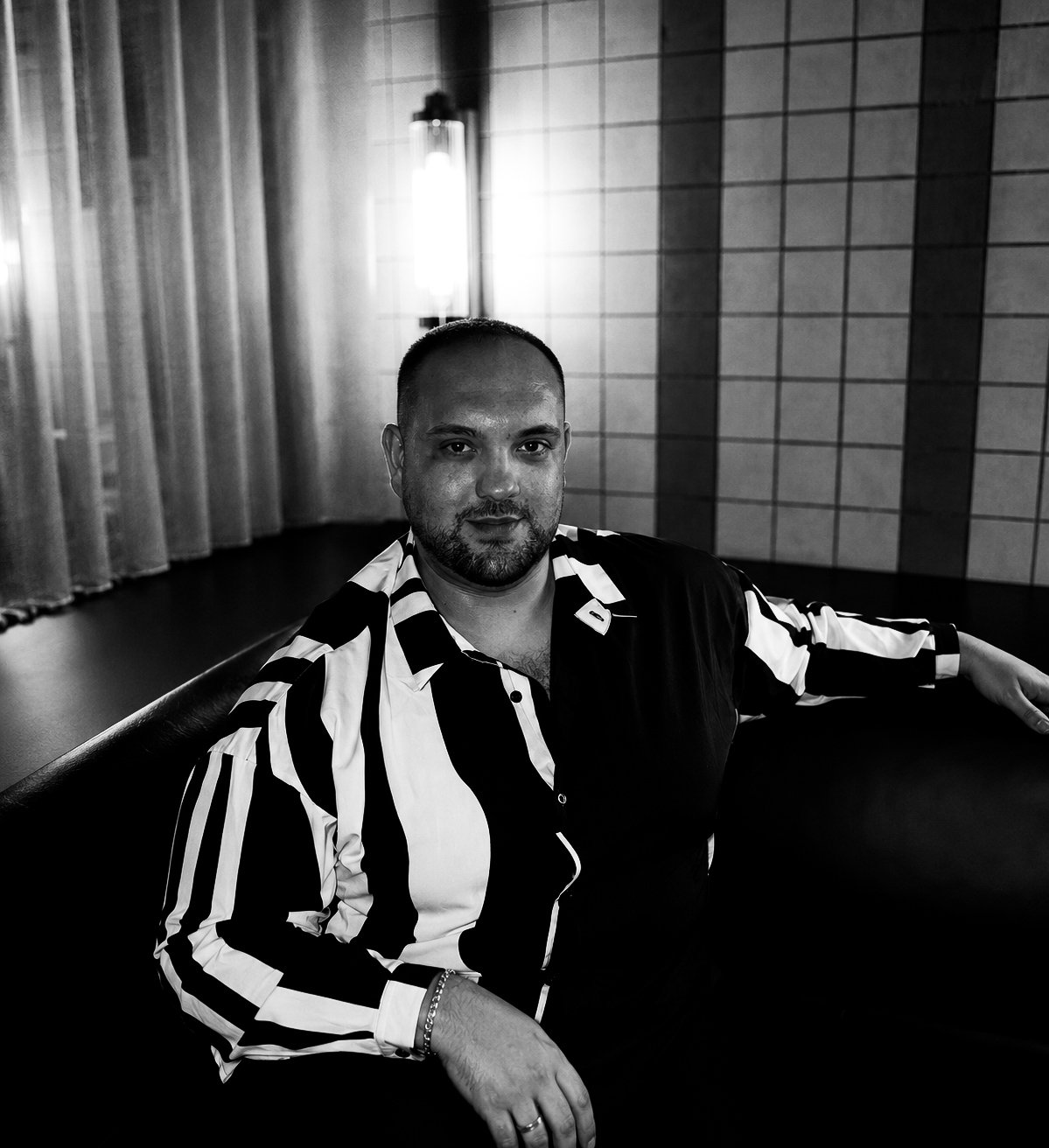
Samuel Marriott-Dowding, Chief Executive Officer, Marriott Communications
There is a familiar piece of advice given to ambitious professionals: work hard, keep your head down, wait your turn.
Eventually, someone will invite you into the room, and for many people, that advice works. For others, it never does.
Not because they lack capability, or intelligence. Not because they have not earned the opportunity, but because institutions, however well-intentioned, often reproduce themselves. They reward familiarity, they promote people who already resemble those sitting around the table, they become comfortable with predictable definitions of leadership.
If you come from outside those traditional pathways - whether because of geography, background, identity or simply because your ambition does not fit comfortably inside established structures - you quickly discover that exceptional work alone is rarely enough.
You are expected to become more acceptable before you become more influential, and that is a trade I was never prepared to make.

Growing Marriott Communications in the North East, I was constantly reminded - subtly and sometimes explicitly - that the most influential businesses, the biggest decisions and the greatest opportunities happened somewhere else. London became shorthand for credibility, and scale became associated with a postcode, rather than capability.
As a young entrepreneur, another lesson quickly emerged. Confidence was welcomed, provided it arrived in familiar packaging - ambition was admired, provided it was exercised by the right people.
For people like me, ambition often attracts different language. We are called difficult before we are called determined, brash before we are called visionary, arrogant before we are recognised as ambitious, strident before we are described as confident.
The irony, of course, is that history rarely remembers the people who quietly accepted the limitations others placed upon them. It remembers the people willing to challenge assumptions, create new institutions and redefine what leadership could look like.

I have never believed there was anything radical about wanting to build something exceptional, or even be exceptional. I have simply believed that exceptional things can be built anywhere.
Including Sunderland, the North East, and by people who were never expected to do so.
That conviction became the foundation of Marriott Communications.
It was never about creating another public relations agency, there were already thousands of those. It was about creating the type of strategic advisory firm I believed organisations increasingly needed: one capable of combining communications, reputation, intelligence and leadership counsel into a single strategic discipline.
More importantly, it became an opportunity to build the culture I had spent years looking for elsewhere. One where judgement matters more than hierarchy, where curiosity outranks conformity, where ideas compete on merit rather than job title, where geography does not define potential, where clients seek intellectual partnership rather than tactical execution.

Building your own organisation is an extraordinary education in leadership because it removes every excuse. Every success belongs to your judgement, and every failure belongs there too. There is no institution to hide behind, no established brand carrying your credibility and no framework quietly absorbing your poor decisions.
You build trust one decision at a time, you build reputation one client at a time, you build influence one relationship at a time.
Over time, something changes. You stop measuring success by whether the established industry recognise you, and Instead, you ask a different question: Are we building something valuable enough that this same industry eventually seek us out?
That shift in thinking changed everything.
The objective was not to become successful, it was to become consequential, to advise organisations facing complex decisions, to help leaders navigate uncertain environments, to support organisations operating in moments where communication becomes leadership.
The work became larger because our thinking became greater.

For myself and people like me, when you are ambitious, driven, and not only know who you are, but also know what you want out of life, and certainly ballsy enough to go and get it - we are labelled arrogant or contrarian - but in reality, we dance to the beat of our own drum overarched by the fact that our dreams are big, our ambitions bigger, and we possess a level of certainty that we are destined to do great things.
So along the way, I also realised something else. Many talented people spend years trying to gain acceptance from systems that were never designed with them in mind. They soften their opinions, reduce their ambitions, wait patiently for validation that may never arrive.
I increasingly believe that is the wrong strategy. Sometimes the most valuable thing you can build is not a career within someone else's institution, it is an institution of your own.
One that reflects your values. One that creates opportunities for others. One that proves different models of leadership can succeed.
This is not an argument against established organisations - large institutions remain essential to economic growth, innovation and public life. Nor is it a romantic celebration of entrepreneurship. Building a business is difficult, uncertain and often deeply uncomfortable.
It is, however, an argument for recognising that leadership is no longer defined solely by the organisations we inherit. Increasingly, it is defined by the organisations we choose to create.

Looking back, I no longer see Marriott Communications as the business I founded, I see it as evidence.
Evidence that globally ambitious advisory firms do not have to emerge from Mayfair or Manhattan, evidence that strategic counsel can be built outside traditional centres of influence, evidence that geography should never become destiny.
I did not build this firm because I could not find a seat at someone else's table, I built it because I realised my ambitions were always bigger than occupying someone else's seat.
I wanted to build the table itself, and perhaps that is the lesson.
The future will not be defined by those invited into the room, it will be shaped by the people courageous enough to build entirely new rooms - and generous enough to leave the door open for others who were told they did not belong.